
Winter can be a difficult time for industrial buildings. Heavy rain, strong winds, freezing temperatures and occasional snowfall can expose roofing problems that were barely noticeable during the warmer months.
For businesses operating from warehouses, factories and commercial premises in Birmingham, a leaking roof can quickly become a serious issue. Water entering a building may damage stock, affect electrical equipment, interrupt production and create unsafe working conditions.
The frustrating part is that many winter roofing problems begin with relatively small defects. A loose fixing, deteriorated flashing or blocked gutter may seem insignificant until prolonged rainfall reveals the damage.
This is where a professional winter industrial roof inspection in Birmingham becomes particularly valuable.
A detailed inspection helps identify existing defects, assess the condition of the roofing system and determine what maintenance or repairs may be necessary.
In this guide, we explain what a winter roof inspection involves, which problems are most likely to develop during colder weather and how businesses can protect their premises.
Why Are Winter Roof Inspections Important for Industrial Buildings?
Industrial roofs are designed to withstand challenging weather, but years of exposure can gradually affect their performance.
Large metal roofs, flat roofing systems and industrial gutters experience constant changes in temperature and moisture levels.
During winter, existing weaknesses may become more noticeable as rainfall increases and temperatures fall.
According to the Met Office, winter is the UK’s coldest season and brings an increased likelihood of frost and snow. Recent UK climate analysis also highlights a longer-term trend towards wetter winters.
For industrial properties, these conditions make effective waterproofing and rainwater drainage particularly important.
A winter inspection is not simply about checking whether the roof is leaking. It provides an opportunity to assess the overall condition of the structure and identify areas that could require attention.
For businesses with valuable machinery, stored goods or temperature-sensitive operations, this can make a considerable difference.
What Does a Winter Industrial Roof Inspection Involve?
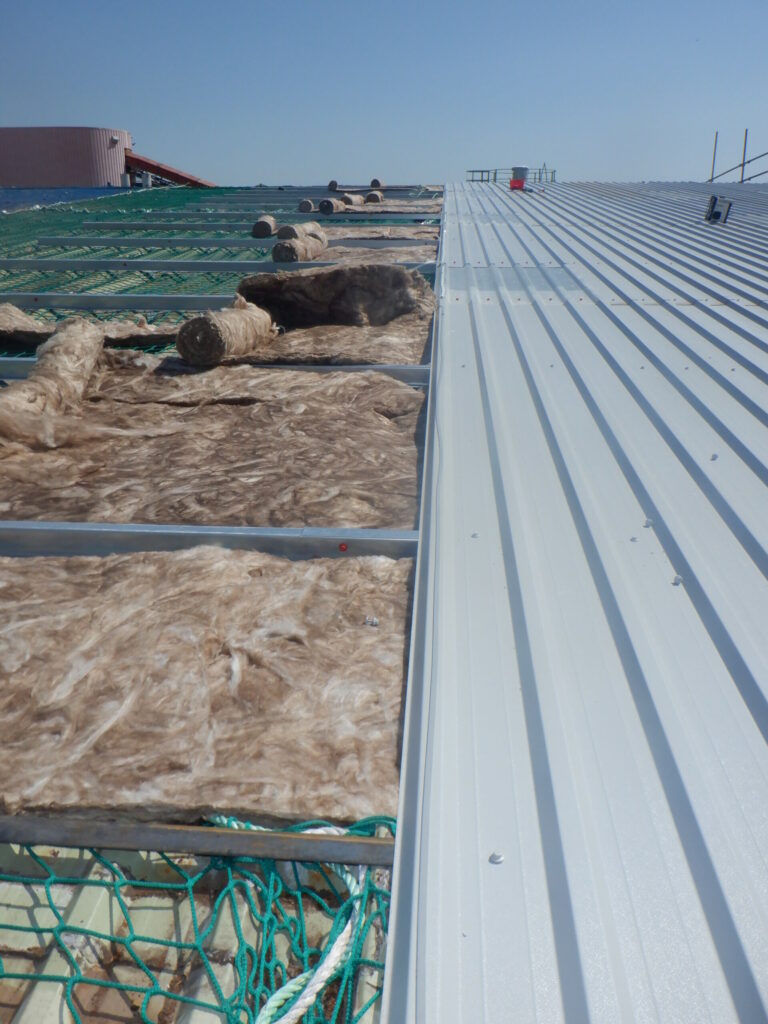
A professional industrial roof inspection assesses the roofing system to determine its condition and identify potential sources of water ingress.
The inspection normally begins with a review of any reported problems.
For example, a facilities manager may have noticed damp patches around a warehouse ceiling, occasional dripping during rainfall or standing water near an internal gutter.
These observations help the roofing contractor concentrate on areas that may require further investigation.
The assessment may then include examining roofing sheets, waterproofing membranes, fixings, flashings, rooflights, gutters and drainage outlets.
Where appropriate, photographs are taken to document defects and provide a clearer understanding of the work required.
The inspection method depends on the building and prevailing weather conditions. Ground-level observations, suitable access equipment or drone surveys may be considered where they allow the roof to be assessed safely.
The findings can then be used to recommend immediate repairs, planned maintenance or further investigation.
How Can Winter Weather Affect Industrial Roofs?
Different winter weather conditions affect roofing materials in different ways.
Heavy Rainfall and Water Ingress
Prolonged rainfall can expose small gaps around roofing joints, penetrations and damaged seals.
Water may travel beneath roofing sheets or along internal structural members before becoming visible inside the building.
This means that the location of an internal leak does not always correspond with the actual point of water entry.
A professional roof inspection helps investigate these possible routes rather than simply applying sealant above the visible damp patch.
Freezing Temperatures and Ice
When water collects in gaps, joints or damaged sections of roofing, freezing conditions may worsen existing defects.
Repeated freezing and thawing can contribute to deterioration in vulnerable materials and connections.
Ice can also restrict drainage outlets, causing rainwater or melting snow to accumulate where it would normally drain away.
Strong Winds and Storm Damage
Winter storms can place additional stress on roof sheets, flashings and fixings.
Loose components may become displaced, while already weakened sections may suffer further damage.
After particularly severe weather, arranging a roof inspection can help establish whether repairs are needed before another period of heavy rainfall.
Why Should Industrial Gutters Be Inspected During Winter?
Industrial gutters are responsible for managing large volumes of rainwater collected from extensive roof areas.
When these gutters become blocked, water can accumulate and overflow into vulnerable parts of the building.
This is particularly concerning for internal valley gutters, where overflowing water may enter the warehouse or factory directly.
Leaves, moss, silt and other debris can build up during autumn and remain inside the guttering system throughout winter.
A winter inspection should therefore consider the condition of gutter channels, outlets, downpipes and existing joints.
Damaged gutter linings and deteriorated seals may also need attention.
Where blockages or defects are identified, professional industrial gutter cleaning and suitable remedial works can help restore effective drainage.
What Roofing Defects Should Be Identified During an Inspection?
While every industrial building is different, several common defects are particularly relevant during the winter months.
Deteriorated Metal Roof Sheets
Older metal roof sheets can develop corrosion as their protective coatings deteriorate.
Corrosion around exposed sheet edges and overlaps can eventually weaken the material and compromise its weather resistance.
Where deterioration is identified early, suitable corrosion treatment or targeted repairs may help prolong the roof’s serviceable life.
Loose Fixings and Damaged Seals
Roof fixings help secure the roofing sheets and maintain weather resistance around fixing penetrations.
Over time, washers may deteriorate or fixings may become loose.
During heavy rainfall, these small defects can allow water to enter the roofing system.
Damaged Flashings and Roof Penetrations
Ventilation ducts, flues and roof-mounted equipment require properly installed weatherproof connections.
If the surrounding flashings or seals deteriorate, rainwater can enter through the affected joints.
A thorough inspection should consider both the visible flashing and the surrounding roofing materials.
Ageing Rooflights
Rooflights allow natural daylight into industrial premises, but older units may develop cracks, failed seals or deterioration around their edges.
They can also become fragile and represent a serious fall-through hazard.
Any suspected rooflight defects should be assessed by competent roofing professionals using appropriate safety precautions.
How Are Flat Industrial Roofs Inspected in Winter?
Flat and low-pitched roofs require particular attention because effective drainage is essential to their performance.
These roofs may use single-ply membranes, bituminous felt or liquid-applied waterproofing systems.
During an inspection, the contractor assesses visible signs of damage such as splits, punctures, failed seams and deterioration around outlets.
Areas where rainwater remains standing for unusually long periods may require further investigation.
Persistent ponding can indicate drainage restrictions, localised settlement or insufficient falls.
However, not every instance of temporary standing water means that the roofing system has failed.
The condition of the waterproofing material, drainage arrangement and manufacturer’s requirements should all be considered before deciding whether repairs are necessary.
For buildings experiencing ongoing problems, a professional flat roof leak investigation can help establish the most appropriate solution.
When Is the Best Time to Arrange a Winter Roof Inspection?
Ideally, industrial roofs should be inspected before the coldest and wettest weather arrives.
A late autumn inspection gives building owners an opportunity to address blocked gutters, damaged flashings and other defects before they become more disruptive.
However, inspections can still be valuable throughout winter, particularly following severe weather or when new leaks develop.
The timing must take account of safe working conditions.
Roof access may be unsuitable during frost, ice, strong winds or heavy rain. In these circumstances, contractors may need to postpone access or use an alternative inspection method.
Businesses should also consider arranging another assessment after significant storm damage.
For older industrial buildings or properties with a history of recurring leaks, more frequent inspections may be appropriate.
What Happens After an Industrial Roof Inspection?
Once the inspection has been completed, the findings should provide a clear picture of the roof’s condition.
A useful roof inspection report identifies the defects observed, explains their potential consequences and recommends suitable remedial actions.
For example, a report may identify blocked valley gutters that require immediate clearance, damaged flashings that should be repaired or sections of corroded roof sheeting that need further assessment.
Not every issue requires urgent replacement.
Some defects can be addressed through relatively straightforward maintenance, while others may justify a larger refurbishment programme.
A written report with supporting photographs also helps facilities managers plan expenditure and maintain records of the building’s condition.
For businesses responsible for several properties, these records can be particularly useful when developing longer-term maintenance budgets.
What UK Regulations Apply to Winter Industrial Roof Inspections?
Under the Work at Height Regulations 2005, industrial roof inspections involving work at height must be properly planned, risk-assessed and carried out by competent people using suitable precautions. The Health and Safety Executive specifically warns against accessing roofs in unsafe weather conditions, including ice, frost and strong winds.
Where fragile rooflights or deteriorated roofing sheets are present, additional precautions are essential, as outlined in the HSE’s guidance on fragile roof surfaces.
Why Is Preventative Maintenance Better Than Emergency Roof Repairs?
Emergency roof repairs are sometimes unavoidable, particularly following unexpected storm damage.
However, relying entirely on reactive repairs can create unnecessary costs and operational difficulties.
If a leak develops above stored goods or production equipment, the resulting disruption may extend beyond the cost of repairing the roof.
Preventative maintenance allows defects to be identified earlier and repairs to be scheduled around business activities.
It also provides an opportunity to monitor ageing roofing materials and decide when refurbishment may become more economical than repeated local repairs.
For industrial buildings, a planned maintenance programme is therefore an investment in the continued operation of the property.
Why Choose Industrial Roofing Birmingham for Winter Roof Inspections?
At Industrial Roofing Birmingham, we understand the challenges of maintaining large commercial and industrial roofs throughout the colder months.
We provide roof surveys, leak investigations, gutter maintenance, targeted repairs and planned maintenance services for warehouses, factories and commercial premises across Birmingham and the surrounding areas.
Our approach focuses on identifying defects, understanding their causes and recommending practical solutions appropriate to the condition of the roof.
Whether your building has developed a winter leak or you want to assess its condition before further deterioration occurs, our team can help.
Explore our roof survey services or visit Industrial Roofing Birmingham to request a quotation.
Final Thoughts
Winter can expose weaknesses in industrial roofing systems that might otherwise remain unnoticed.
Blocked gutters, deteriorated fixings, damaged flashings and ageing waterproofing materials can all contribute to water ingress during prolonged rainfall and colder weather.
A professional winter industrial roof inspection helps identify these issues before they develop into more expensive problems.
For Birmingham businesses, regular inspections and planned maintenance provide a practical way to protect buildings, reduce disruption and extend the useful life of existing roofing systems.
Frequently Asked Questions
1. Can an industrial roof inspection be carried out during winter?
Yes, industrial roof inspections can be carried out during winter when weather conditions and access arrangements allow the work to be completed safely. However, roof access should be avoided during unsafe conditions such as ice, frost, strong winds or slippery weather. Contractors may use alternative assessment methods or rearrange the inspection until conditions improve.
2. How often should industrial roofs be inspected in Birmingham?
For many industrial buildings, arranging inspections once or twice a year is a sensible starting point, although the appropriate frequency depends on the roof’s age, condition and manufacturer’s recommendations. Additional inspections may be needed after severe storms, when leaks develop or where previous repairs require monitoring.
