
Fixed Ladder Inspection
Fixed ladders are essential for providing safe access to rooftops, plant rooms, maintenance platforms and elevated working areas. Across Birmingham, thousands of commercial and industrial buildings rely on these permanent access systems for routine maintenance, inspections and repair work.
However, fixed ladders can deteriorate over time. Corrosion, loose fixings, damaged rungs and structural movement can compromise their safety, increasing the risk of serious workplace accidents.
For business owners, facilities managers and building maintenance teams, arranging regular fixed ladder inspections in Birmingham is an important part of maintaining a safe working environment and meeting UK health and safety obligations.
Understanding when inspections are required, what they involve and who is responsible can help businesses identify hazards before they lead to accidents.
This guide explains everything Birmingham businesses need to know about fixed ladder safety, inspection requirements and ongoing maintenance.
What Is a Fixed Ladder Inspection?
A fixed ladder inspection is a systematic assessment of a permanently installed ladder to determine whether it remains safe for its intended use.
Unlike portable ladders, fixed ladders are secured to buildings or supporting structures and commonly provide access to areas that require periodic maintenance.
They are frequently installed on:
- Industrial warehouses and distribution centres
- Manufacturing facilities and factories
- Commercial buildings and office premises
- Roofs and rooftop plant installations
- Storage facilities and maintenance platforms
A professional inspection examines the ladder’s structural condition, fixings, supporting brackets, access arrangements and associated safety equipment.
The objective is to identify defects, deterioration or installation issues that could affect user safety.
Following an inspection, a written report should record the findings, highlight defects and recommend any necessary remedial work.
Why Are Fixed Ladder Inspections Important?
A fixed ladder may appear secure from ground level while concealing serious defects around its fixings, connections or supporting structure.
Without regular inspections, these problems can remain unnoticed until the ladder is used.
1. Preventing Falls and Workplace Accidents
Working at height remains a significant safety concern across construction, manufacturing and building maintenance.
Damaged rungs, unstable brackets or corroded structural components can cause a ladder to become unsafe.
Routine inspections help identify these hazards before employees or contractors are exposed to unnecessary risks.
2. Meeting Health and Safety Responsibilities
Businesses have legal responsibilities to ensure that work equipment and access arrangements are suitable, maintained and safe.
A documented inspection programme helps demonstrate that potential hazards are being identified and managed.
3. Reducing Unexpected Maintenance Costs
Early corrosion, loose bolts and minor damage are generally easier to address before they develop into major structural problems.
Regular inspections allow maintenance teams to plan repairs rather than respond to unexpected failures.
4. Supporting Safe Roof Maintenance
Fixed ladders are commonly used to access commercial roofs for gutter cleaning, roof surveys, safety system inspections and leak repairs.
If the access ladder is unsafe, essential roof maintenance may need to be postponed until suitable alternative access arrangements are provided.
Maintaining the ladder is therefore an important part of protecting the wider building.
UK Fixed Ladder Inspection Regulations
Businesses in Birmingham must consider several UK regulations when managing fixed ladders and permanent access equipment.
Work at Height Regulations 2005
The Work at Height Regulations 2005 establish requirements for planning, supervising and carrying out work at height safely.
Dutyholders must ensure that appropriate equipment is selected, workers are competent and relevant equipment is inspected and maintained.
These requirements also apply to permanent access arrangements where their use creates a risk of falling.
Provision and Use of Work Equipment Regulations 1998 (PUWER)
PUWER applies to work equipment within its scope and requires suitable inspection arrangements where deterioration could result in dangerous conditions.
Inspection intervals should reflect the equipment’s condition, operating environment, manufacturer’s recommendations and risk assessment.
Inspection findings must be recorded where required, with records retained at least until the next inspection.
British Standards for Fixed Ladders
BS 4211:2005+A1:2008 is a recognised British Standard covering permanently fixed ladders.
Depending on the installation, other applicable standards may also need consideration.
Inspectors should assess the ladder against relevant requirements, its original design specification and the risks associated with its intended use.
An older installation does not automatically become compliant with every newer standard, so any necessary improvements should be determined through a competent assessment.
How Often Should Fixed Ladders Be Inspected in Birmingham?
One of the most common questions from facilities managers is how frequently fixed ladders need inspecting.
There is no universal UK legal requirement stating that every fixed ladder must receive a formal inspection exactly once every 12 months.
The appropriate inspection frequency depends on the risks associated with the installation.
For many commercial properties, an annual formal inspection may provide a reasonable starting point. However, some installations require more frequent assessments.
Factors influencing inspection frequency include:
- How frequently the ladder is used
- Exposure to rain, moisture and corrosion
- The age and condition of the installation
- Industrial contamination or chemical exposure
- Manufacturer recommendations
- Previous inspection findings and repairs
Workers should also check the ladder for obvious defects before use.
Additional inspections may be necessary following accidental impact, alterations, severe weather or suspected structural damage.
The Health and Safety Executive advises that work equipment inspection intervals should be determined through risk assessment rather than applying an arbitrary schedule to every installation.
For Birmingham businesses, incorporating fixed ladder inspections into a planned annual maintenance programme can help ensure that access systems are not overlooked.
What Does a Professional Fixed Ladder Inspection Include?
A thorough inspection assesses the ladder itself, its connection to the building and the safety of the surrounding access arrangements.
1. Ladder Rungs and Side Rails
Inspectors examine the ladder’s rungs and side rails for cracks, bending, deformation, corrosion and other visible damage.
Particular attention is given to loose rungs, damaged welds and weakened connections that could affect structural integrity.
2. Fixings and Supporting Brackets
Fixed ladders rely on secure connections to transfer loads into the supporting structure.
Inspectors check brackets, bolts and fixing points for signs of movement, corrosion, missing components and deterioration.
The supporting wall or structure may also require assessment where cracking or damage is visible.
3. Corrosion and Weather Damage
External ladders are continuously exposed to changing weather conditions.
Moisture can gradually damage protective coatings and encourage corrosion, particularly around joints and exposed metal connections.
Inspectors assess whether deterioration affects the ladder’s strength or requires preventative maintenance.
4. Safety Cages and Fall Protection
Where fitted, safety cages, hoops and associated components should be inspected for damage, loose connections and corrosion.
Importantly, a safety cage should not automatically be treated as an effective fall-arrest system. The HSE has warned that hooped ladders may not safely arrest a fall without injury. Appropriate fall protection must be established through risk assessment.
5. Access and Exit Points
The inspection should also consider whether users can safely enter and leave the ladder.
This includes checking access hatches, landing areas, handholds, obstructions and adjacent edge protection.
A structurally sound ladder can still present serious risks if its access arrangements are unsuitable.
Common Fixed Ladder Defects Found on Industrial Buildings
Fixed ladders installed on commercial and industrial buildings can develop several types of deterioration.
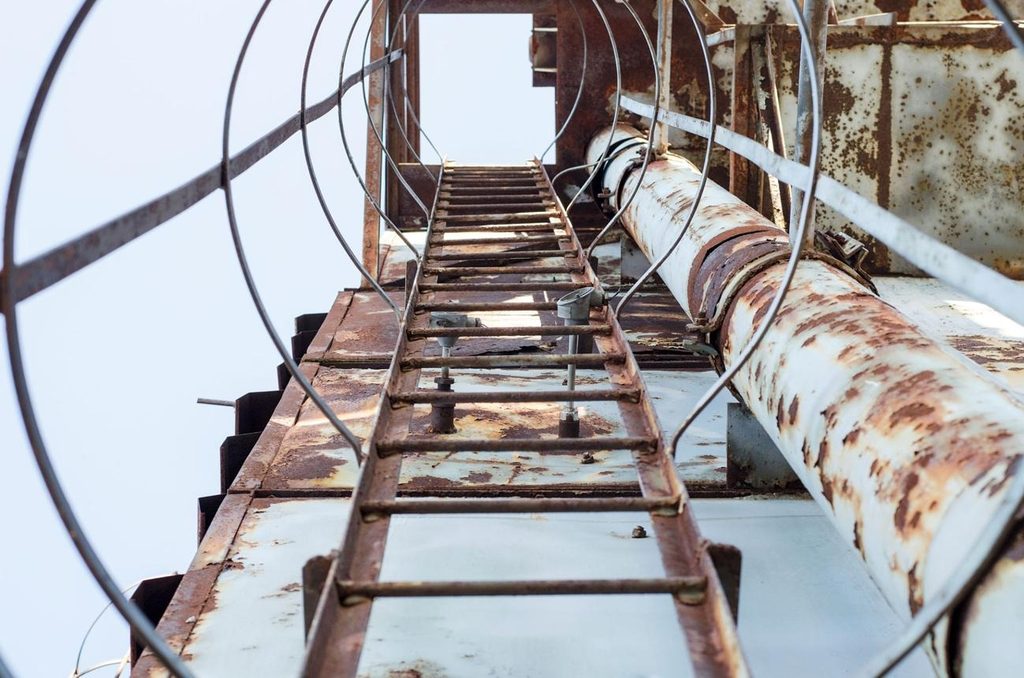
Corrosion and rust
Deterioration of steel components can reduce structural strength, particularly when corrosion affects critical connections.
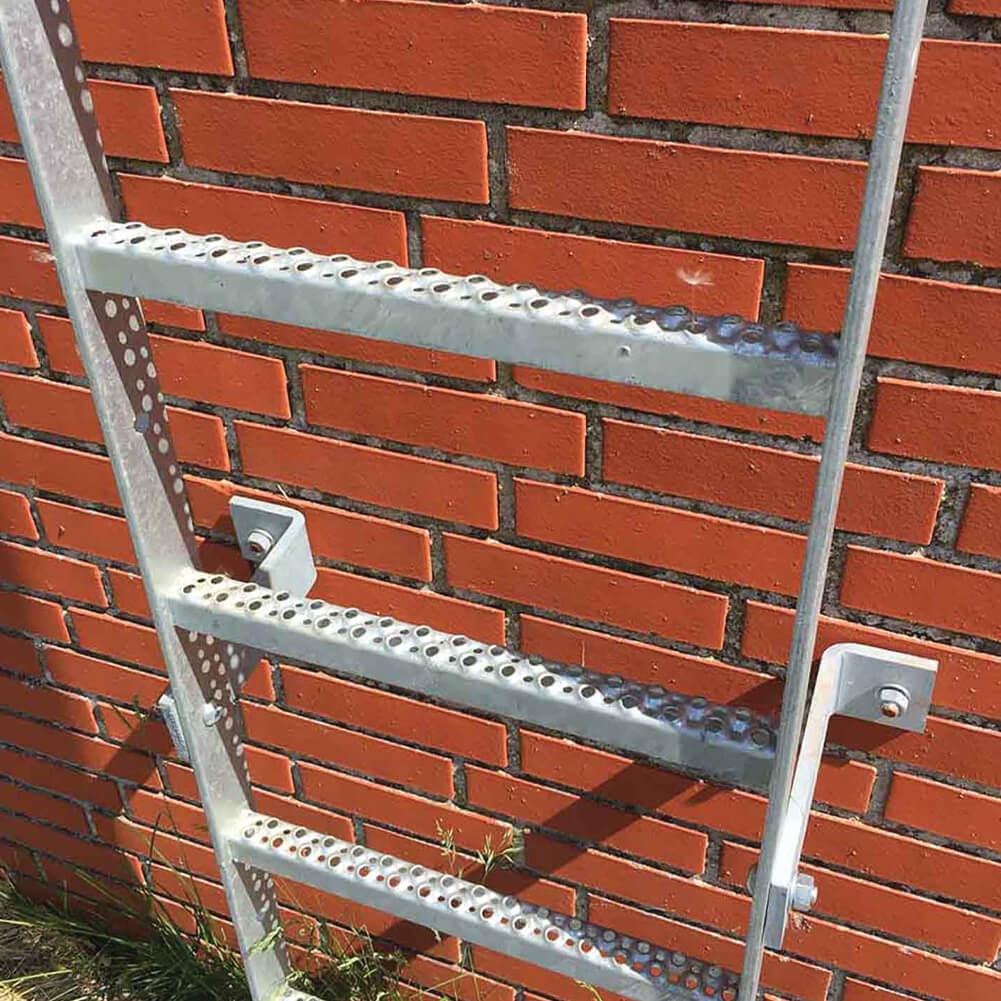
Loose or missing fixings
Loose bolts or damaged brackets can compromise the ladder’s stability and its connection to the building.
Damaged rungs and connections
Bent, cracked or loose rungs may create unsafe footholds and increase the likelihood of falls.
Other concerns include damaged protective coatings, unsafe landing arrangements and poorly maintained access hatches.
Identifying these issues early allows building owners to prioritise repairs and maintain reliable roof access.
What Happens If a Fixed Ladder Fails Inspection?
If an inspection identifies a defect that makes a ladder unsafe, it should be removed from use until appropriate corrective measures have been completed.
Depending on the findings, remedial work may involve replacing damaged fixings, repairing suitable components, improving access arrangements or replacing the ladder entirely.
Where structural integrity is uncertain, further specialist assessment may be necessary.
A failed inspection does not automatically mean complete replacement is required. The appropriate solution depends on the severity and location of the defects.
Following remedial work, the ladder should be assessed as necessary before returning it to service.
Who Is Responsible for Fixed Ladder Inspections?
Responsibility generally rests with the organisation or dutyholder controlling the work equipment and activities undertaken at height.
Depending on the premises and contractual arrangements, this may involve the building owner, employer, managing agent or facilities management company.
Inspections should be carried out by someone with sufficient knowledge, training and experience to recognise relevant defects and determine appropriate action.
The required competence depends on the complexity of the ladder and its installation.
Businesses should also retain inspection records, monitor outstanding defects and ensure that identified safety issues are addressed.
Fixed Ladder Inspections for Birmingham Warehouses and Commercial Properties
Birmingham has a substantial industrial and commercial property sector, including warehouses, manufacturing plants, distribution centres and logistics facilities.
Many of these buildings require regular rooftop access for ventilation equipment, drainage maintenance, building inspections and other essential services.
A safe fixed ladder provides an important connection between ground level and these working areas.
For properties in Birmingham, Solihull, Sutton Coldfield, Erdington and surrounding West Midlands locations, planned ladder inspections can form part of a wider building maintenance strategy.
Combining ladder inspections with roof surveys, gutter maintenance and safety system checks can also help facilities managers coordinate access requirements and reduce unnecessary disruption.
Why Choose Industrial Roofing Birmingham?
At Industrial Roofing Birmingham, we provide fixed ladder inspection services for commercial and industrial properties across Birmingham and the surrounding areas.
Our inspections focus on identifying defects, assessing the condition of permanent access systems and providing clear recommendations for remedial work.
We understand that safe roof access is essential for ongoing building maintenance.
Alongside fixed ladder inspections, we provide services covering fixed ladders and Katt ladders, roof maintenance and other safety systems.
Our aim is to help businesses maintain dependable access arrangements while supporting their workplace safety responsibilities.
